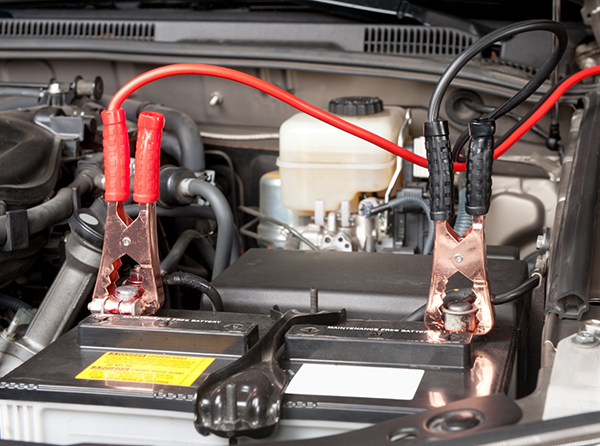
Car Battery Replacement
Car Battery Replacement in Riverside, CA
Professional Battery Services with Expert Installation
When Your Vehicle Shows Signs of Battery Failure
Your car’s battery is the heart of its electrical system. When it begins to fail, you’ll notice several warning signs that it’s time to replace it. If your vehicle won’t start or cranks slowly, especially on cold mornings, it often points to declining battery voltage and reduced cold-cranking amps (CCA). Dim headlights, particularly when idling, suggest that your battery can no longer maintain sufficient electrical current to power your vehicle’s systems effectively. The battery warning light on your dashboard serves as an early indicator that your charging system isn’t functioning optimally, which could stem from battery deterioration or alternator issues. When electrical components like your radio, air conditioning, or power windows operate sluggishly or intermittently, this typically means your battery lacks the capacity to support your vehicle’s electrical demands. At Riverside, our ASE-certified technicians understand that most car batteries reach the end of their useful life between three and five years, depending on driving conditions and climate exposure. Corrosion buildup on battery terminals creates resistance, preventing proper electrical connections and often requiring immediate attention to prevent complete battery failure and potential damage to surrounding components.
Understanding Battery Types and Components
Modern vehicles utilize different battery technologies, with standard flooded batteries and Absorbent Glass Mat (AGM) batteries being the most common options for car battery replacement services. AGM batteries offer superior performance in extreme temperatures and deliver higher cold-cranking amps, making them ideal for vehicles with advanced electrical systems or stop-start technology. The battery terminals —both positive and negative posts —must maintain clean, tight connections to ensure optimal electrical flow throughout your vehicle’s systems. Battery cables carry electrical current from your battery to the starter motor and alternator, and any corrosion or fraying in these cables can prevent proper battery operation, even after a new battery installation. The battery hold-down system secures your battery in place, preventing movement that could damage internal components or create dangerous electrical shorts during vehicle operation. Your battery tray provides the foundation for safe battery mounting. It often shows signs of corrosion that our technicians at 1049 W La Cadena Dr, Riverside, CA 92501 address during replacement services. The alternator works in conjunction with your battery to maintain electrical system voltage, and we always test the alternator output during battery replacement to ensure your new battery charges properly.
Comprehensive Battery Testing and Installation Process
Our battery replacement process begins with thorough electrical system diagnostics using computerized testing equipment to determine whether your battery truly needs replacement or if other components are causing starting issues. We perform battery load tests that simulate real-world electrical demands, measuring your battery’s ability to maintain voltage under load conditions that replicate actual driving scenarios. Alternator testing ensures your charging system can properly maintain your new battery’s charge, preventing premature battery failure and protecting your investment in quality replacement parts. During installation, our technicians clean battery terminals and apply protective coatings to prevent future corrosion buildup that could compromise electrical connections. We inspect battery cables for signs of wear, corrosion, or damage that could affect your new battery’s performance, replacing any components that don’t meet our quality standards. The battery tray receives a thorough cleaning and inspection for structural integrity, ensuring your new battery will be securely mounted and protected from road vibrations. Our team at Riverside provides starter motor testing when necessary, as a failing starter can create symptoms that mimic battery problems, helping you avoid unnecessary battery replacement costs.
Frequently Asked Questions
How long does a car battery replacement take?
Most battery replacements take 30-45 minutes, including testing and installation. However, if additional electrical system diagnostics are needed, the process may take longer to ensure proper diagnosis.
What’s the difference between AGM and standard batteries?
AGM batteries offer better performance in extreme temperatures, longer lifespan, and higher cold cranking amps. They’re recommended for vehicles with advanced electrical systems or stop-start technology.
How often should I replace my car battery?
Most batteries last 3-5 years, depending on climate, driving habits, and vehicle electrical demands. Regular testing can help determine when replacement is needed before complete failure occurs.
Can you test my alternator during battery replacement?
Yes, we always test the alternator output during battery replacement to ensure your charging system properly maintains your new battery’s charge and prevents premature failure.
Do you offer mobile battery replacement services?
Contact us at (951) 823-0530 to discuss mobile battery replacement options. We prioritize same-day service and can often accommodate emergency battery replacement needs.